Manual temperature checks can provide snapshots at defined times. Automated monitoring can provide continuous data capture, centralized visibility and configured alerts between those observation points.
Understand the practical difference between manual records and automated environmental monitoring.
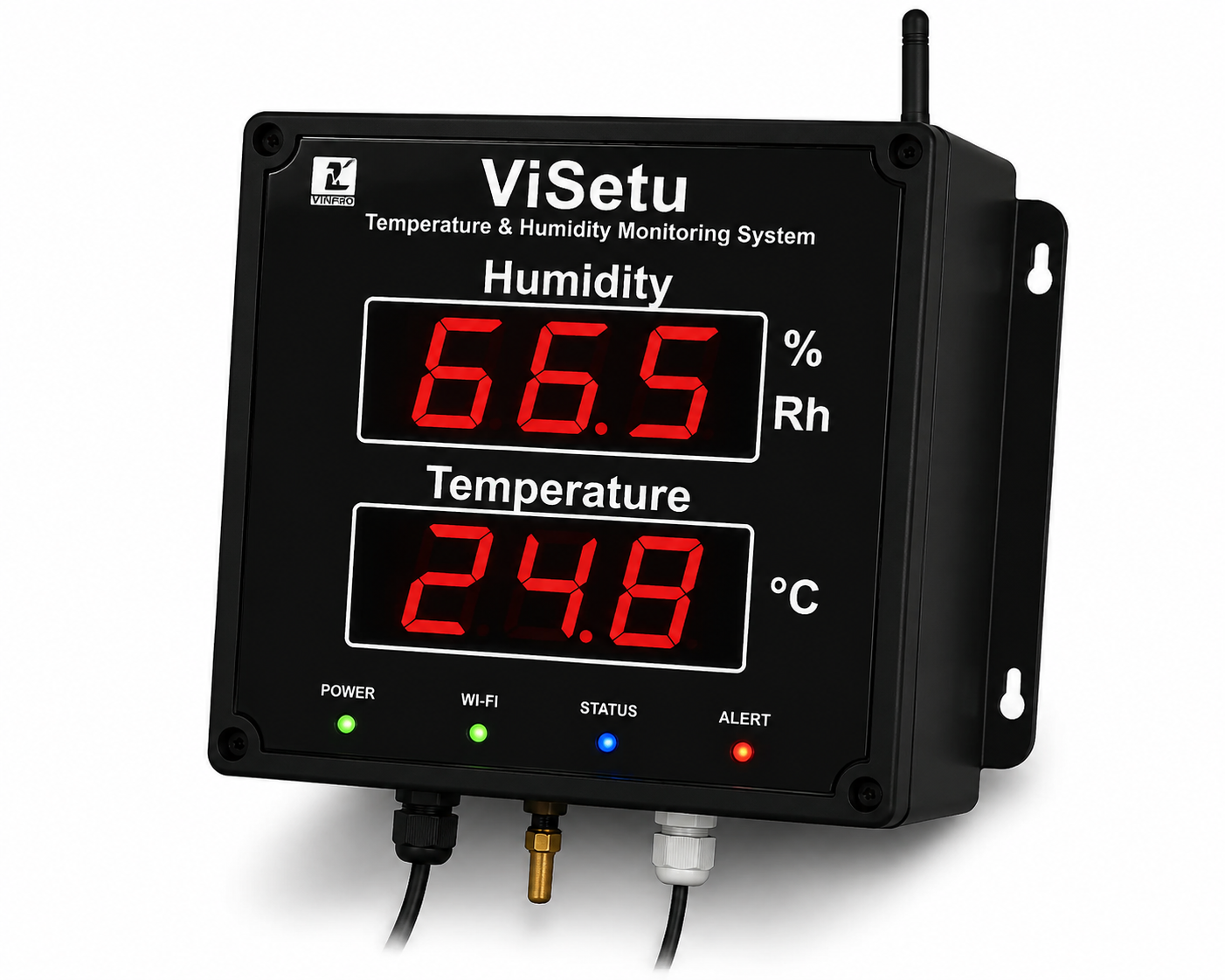
An operator checks the defined location at scheduled intervals.
Readings are entered into a register, form or other record.
Conditions changing between observation points may not be visible immediately.
Trend analysis often requires additional compilation and review.
Monitoring devices continuously capture configured readings.
Users can view multiple monitoring points from one application.
Warning, critical and device communication conditions can be highlighted.
Captured readings can be reviewed graphically and historically.
Online/offline status can help users identify communication conditions.
Manual: periodic checks. Automated: continuous according to system configuration.
Manual: operator entry. Automated: electronic acquisition.
Manual: point-in-time. Automated: centralized current and historical visibility.
Manual: depends on observation and procedure. Automated: configured system alerts can provide faster awareness.
Manual: additional locations increase operational effort. Automated: monitoring points can be added to the system architecture.
Identify rooms, equipment and storage areas requiring monitoring.
Determine Temperature, RH, limits and monitoring requirements.
Choose the appropriate device, network, server/cloud and dashboard design.
Establish responsibilities, alarm response, review and qualification activities.
Practical answers for customers evaluating environmental monitoring.
Not necessarily. The appropriate monitoring method depends on the application, risk, SOPs and customer requirements.
It can provide more continuous visibility, electronic data capture, configured alerts and easier historical trend review.
No. Automation supports the process; SOPs, responsibilities and quality controls remain essential.
It can provide electronic monitoring and records where the configured system is approved for that purpose by the customer.
Tell us about your monitoring locations, approximate monitoring points, Temperature/RH requirements and preferred deployment architecture. Our team can discuss a suitable ViSetuEMS configuration.